
EOCC Wintersville Release Meaning
Eastern Ohio Correction Center in Wintersville is a secure community-based correctional facility, often shortened to CBCF. It is a residential judicial sanction within Ohio community corrections. It is not Carroll County Jail, even when the underlying case comes from Carroll County. It is also not an ODRC state prison.
A resident may complete the residential phase and move into community-based supervision. The Common Pleas order may continue community control for years after the person leaves the building. Community control is a court-managed sanction served under rules in the community; it is not the same as unconditional discharge. A different court order, violation response, transfer, or later prison commitment can produce another outcome.
For that reason, “released from EOCC Wintersville” should identify the physical facility milestone only. “Discharged from supervision” requires a later court or probation record. A Carroll County Jail recent-release list would not contain an EOCC completion, and Carroll County does not publish such a jail feed in any event.
Confirm an EOCC Wintersville Exit
There is no general public EOCC release feed documented in the research. The correct workflow follows the court referral and supervision record rather than searching a jail roster.
- Confirm the person was placed at the Wintersville site. Use full identifying details and the Carroll County case number when available.
- Ask EOCC about current residential status and the proper channel for an existing completion, discharge, or transfer record.
- Request the operative Carroll County Common Pleas journal entry. Look for sentencing, CBCF placement, modification, completion, violation, or discharge language.
- Check Carroll County Adult Probation for current community-control status and the governing court entry.
- If the record shows later ODRC commitment, switch to ODRC Offender Search. A prison record answers a different custody episode.
The Carroll County released-inmate search routes help when the last custodian is uncertain. Do not use the Carroll jail call as the main source for an EOCC resident unless a separate record shows the person returned to county jail.
EOCC Wintersville Contact Record
Use the official facility source for current contact instructions because the research confirms the site address but does not provide a verified phone number or public records-counter schedule. The court and probation offices hold different parts of the Carroll County placement history.
470 State Route 43
Wintersville, OH 43953
Male secure CBCF
Serves participating Common Pleas Courts, including Carroll County
For the Carroll case, contact the Common Pleas Clerk at 119 South Lisbon Street, Suite 401, Carrollton, OH 44615, 330-627-4886. Ask for filed journal entries rather than a summary. Adult Probation should be approached for supervision status through the official court route.
EOCC Wintersville Program Profile
The official EOCC overview describes a regional program serving participating Common Pleas Courts. It is designed for court-placed people in nonviolent or lower-level felony cases. The documented framework allows placement for as much as six months, followed by community control for as much as five years.
The average is descriptive, not a projected release date for one resident. Court orders, program progress, violations, and other case facts control an individual path. The paired Lisbon site serves women and has its own location and capacity. The two sites belong to one regional correctional framework but should never be treated as the same building or population.
The official EOCC source shows why the Carroll connection is judicial rather than geographic. The Wintersville facility is outside Carroll County, yet Carroll Common Pleas can refer eligible people there.
EOCC Wintersville Custody Comparison
Sorting the facility type prevents the wrong search from producing a false answer. Each system documents a separate stage.
| System | What it records | Release check |
|---|---|---|
| Eastern Ohio Correction Center: Wintersville | Secure male CBCF residence | Facility status and completion or transfer record |
| Carroll Common Pleas | Sentence, placement, modification, and discharge orders | Filed court journal entries |
| Adult Probation | Community-control supervision | Current status under the court order |
| Carroll County Jail | County jail booking and custody episode | Sheriff release log |
| ODRC | State prison and related APA records | State offender record and exact status |
A person can move from Carroll County Jail to EOCC under a court order, then leave EOCC while supervision continues. Each transition has its own record. None should be collapsed into one release date.
EOCC Wintersville Court Entries
Common Pleas is the central public record for a Carroll County referral. Request the judgment and sentencing entry that imposed community control and identified residential placement. Later entries may address completion, modification, violation, continued supervision, revocation, or termination. Use the exact words from the filed entry.
A Municipal Court result may show the early stages of a felony case before bind-over. Once the felony proceeds in Common Pleas, the Common Pleas file governs the EOCC placement. The two courts sit in the same Carrollton courthouse complex but keep different case categories. Municipal is in Suite 301; Common Pleas records are routed through Suite 401.
The court order explains legal authority. It may not give the exact hour the person physically left Wintersville. Ask the facility for that event if precise timing is needed, then pair it with the court entry.
EOCC Wintersville Supervision Status
Completion of the residential program often leads to continued community control. Carroll County Adult Probation handles felony community control ordered by Common Pleas. Verify whether supervision remains active and ask for the later termination or discharge entry when final completion is the question.
- Residential completion
- The secure facility phase ended.
- Community control
- Court-ordered rules continue outside the residential facility.
- Discharge
- The relevant court or supervision obligation ended according to an official entry.
- Revocation
- The court changed or ended community control after the required process.
These labels are not interchangeable. A person may be out of EOCC and still under substantial restrictions. Likewise, a supervision violation does not by itself prove present jail or prison custody.
EOCC Wintersville and ODRC
ODRC Offender Search is not the routine locator for EOCC residence. Use it only when a separate record shows Ohio state-prison custody or Adult Parole Authority involvement. A Carroll County commitment can be narrowed in ODRC Offender Search with the county-of-commitment field, but the result describes the state system.
If an ODRC result says incarcerated, state custody continues. “Released” with APA supervision means prison confinement ended while state control remains. An expected-release or parole-eligibility date is not an EOCC completion date. Read the exact label and avoid applying state prison date definitions to the CBCF program.
EOCC Wintersville Source View
The EOCC facility overview documents the regional structure, the male and female sites, participating counties, program length, and capacity.
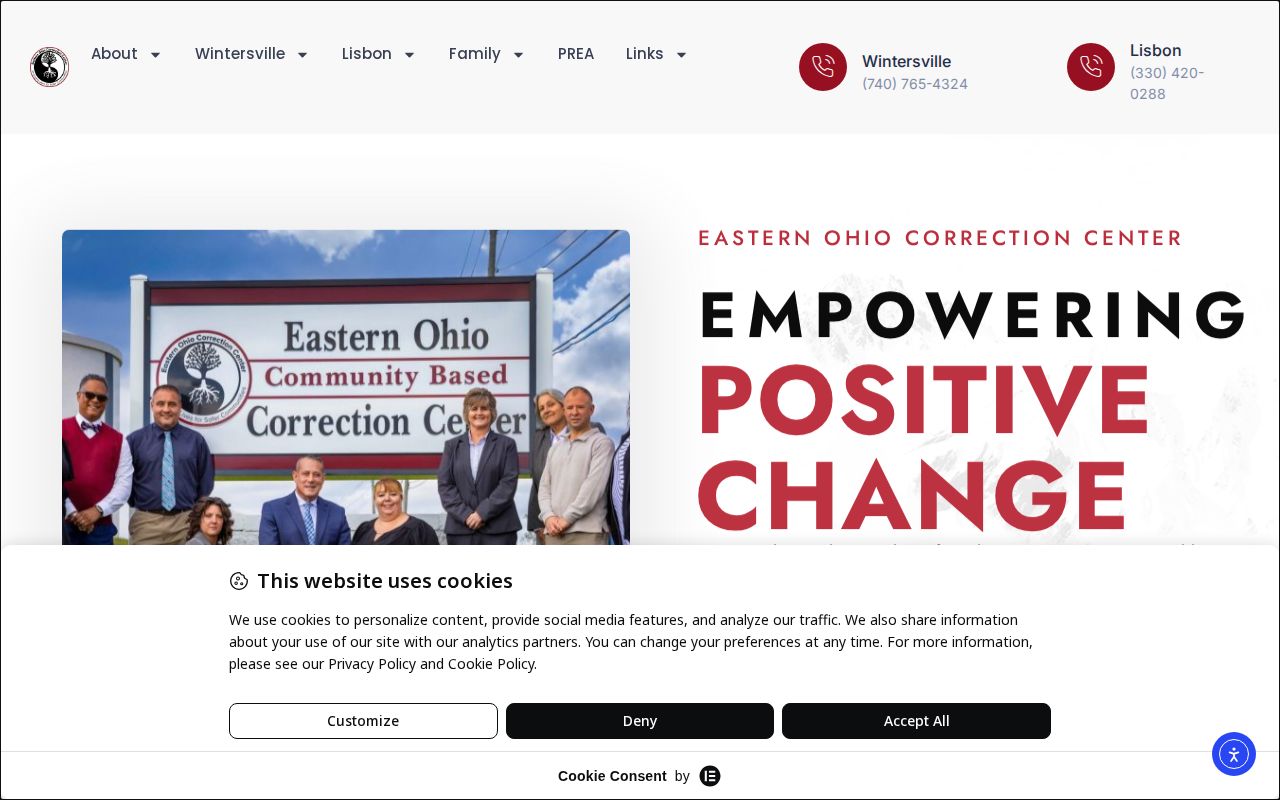
The captured official page supports the classification of Wintersville as the male secure CBCF serving Carroll referrals. It does not function as a live roster or a released-resident feed, so current status still requires facility and court confirmation.
After EOCC Wintersville Release
A sound final answer should state each milestone separately: the date EOCC residence ended, the court order tied to that transition, and whether Adult Probation supervision continued. If another facility received the person, name the new custodian instead of saying the person returned home.
Do not search the Carroll 24-hour or 72-hour jail pages for an EOCC event. Those pages address Carroll County Jail and document that no official local feed exists. Do not use BOP or ICE tools unless a later federal or immigration record makes them relevant. Agency identity and the court entry control the search path.
Note: The average residential stay is a program statistic, not a promise or calculated release date for any resident.